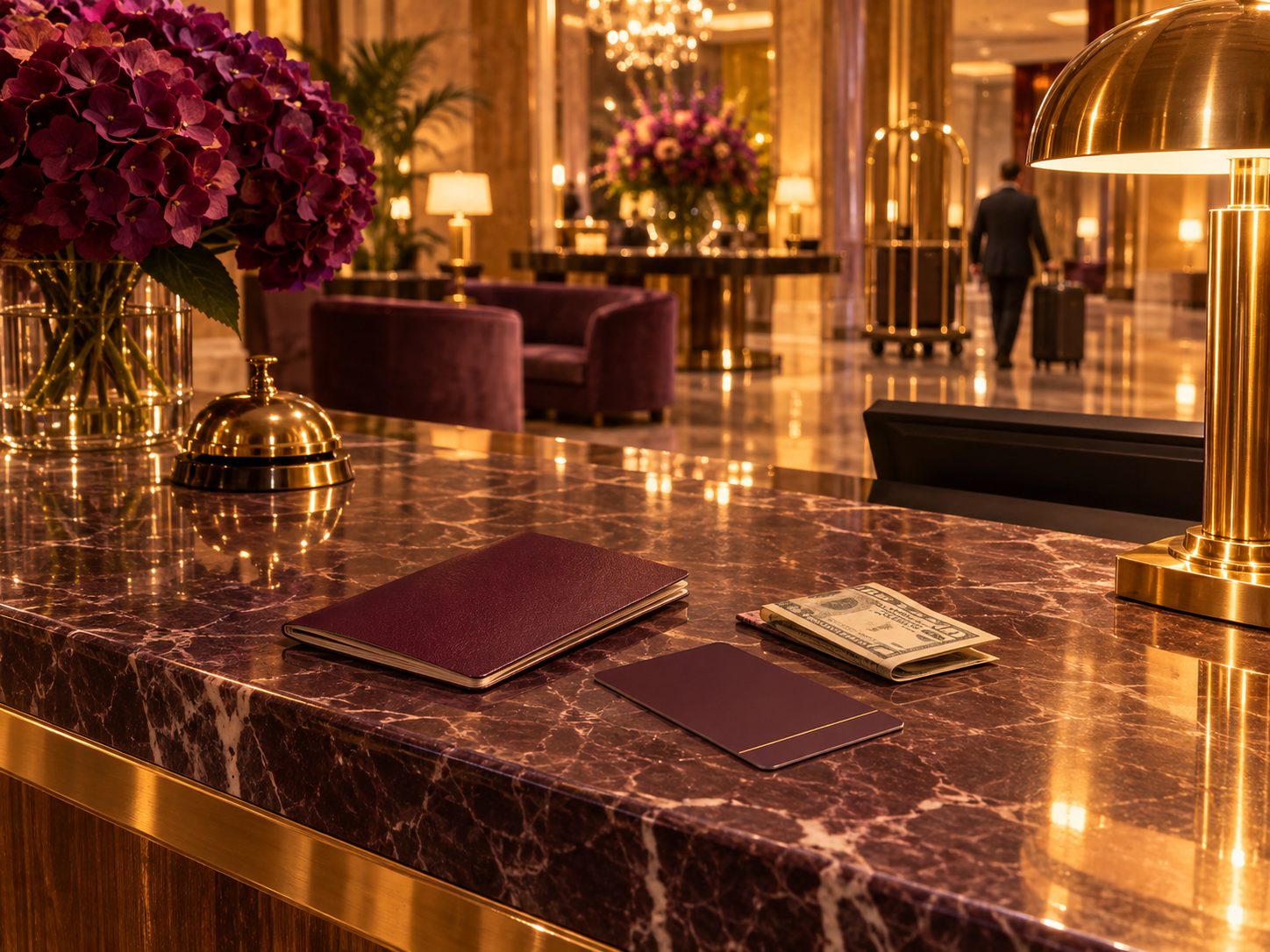
The $20 check-in tip is an informal request, not a hotel program. A traveler may offer a small gratuity while asking whether a complimentary room move is available, but no hotel is required to accept it or provide an upgrade.
In 2026, the decision is simple: ask only when you are already checking in at a staffed desk, keep the request polite, and treat the money as optional. Mobile check-in, kiosks, occupancy, room inventory, and the hotel’s own policies can all make the answer no.
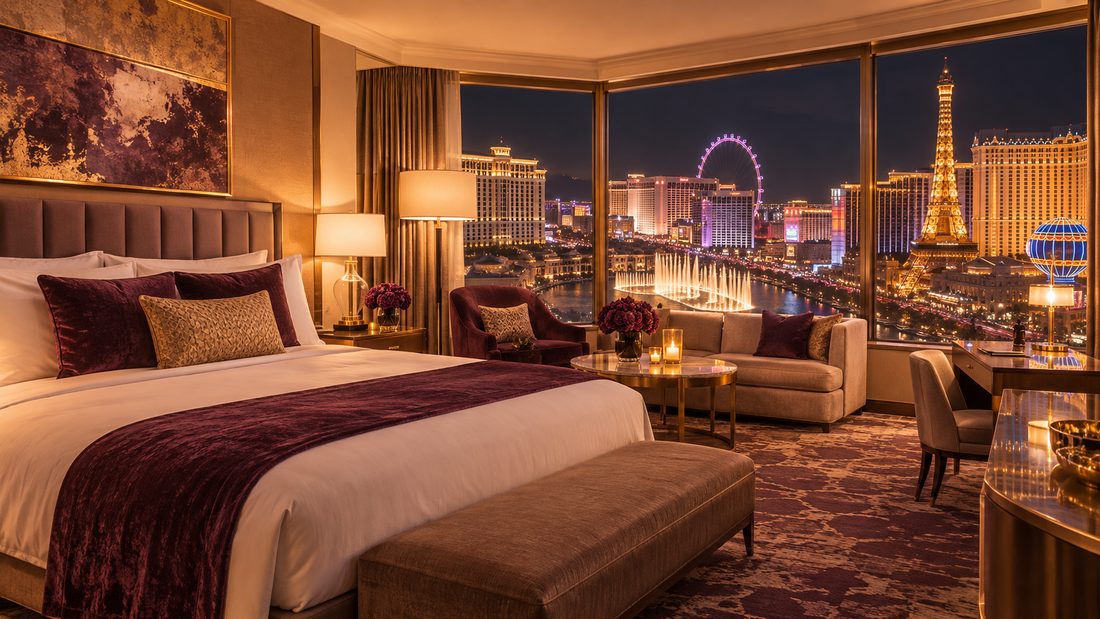
What Exactly Is the $20 Trick?
The concept is beautifully simple. When checking into your Las Vegas hotel:
- Place a $20 bill between your ID and credit card
- Hand the "sandwich" to the front desk agent
- Politely ask: "Are there any complimentary upgrades available?"
- Smile and wait
If the agent can help, they'll pocket the $20 and assign you a better room. If they can't (or won't), the worst that typically happens is they slide the $20 back to you with a polite smile.
The trick became famous through internet travel forums in the early 2000s and has since become one of Las Vegas's most talked-about travel legends.
The Honest Answer: There Is No Reliable Success Rate
Public traveler reports can show that people sometimes receive room moves after asking, but they cannot establish a hotel-wide success rate. The controllable factors are availability and the way you ask, not the denomination of the bill.
- Ask at a staffed desk: a kiosk or mobile flow may leave no person who can review room inventory.
- Ask about options, not entitlement: “Are any complimentary room moves available tonight?” is clearer than demanding a suite.
- Keep your booked room acceptable: never book a room you would dislike if the answer is no.
- Stop after one answer: a refusal is not an invitation to increase the tip.
What Can the $20 Trick Get You?
According to travelers who've had success, reported upgrades include:
- Higher-floor rooms with better views
- Strip-view upgrades (from city/pool view)
- Corner rooms (larger, with wraparound windows)
- Suite upgrades (the holy grail)
- Early check-in or late checkout
- Resort credits
The most common upgrade is a higher floor with a better view. Full suite upgrades are rare but do happen, especially midweek when occupancy is lower.
Choose Your Approach by Trip Priority
| Your priority | Practical approach | Limitation |
|---|---|---|
| Guaranteed room type | Book the room category you actually need. | The tip cannot create inventory or guarantee a suite. |
| Better view or floor | Ask whether a complimentary move is available at check-in. | A move may change the view, floor, or bed type; confirm before accepting. |
| Low-risk budget | Keep the $20 in your wallet and ask without offering it first. | A no-cost request may still be declined. |
| Mobile-first check-in | Use the hotel’s stated check-in process and ask staff only if you need help. | There may be no desk interaction or upgrade review. |
Illustrative downside: if you offer $20 and nothing changes, your avoidable cost is $20. If you keep the money until a staff member confirms a move, you can decide whether the benefit is worth the tip. Neither approach creates a right to an upgrade.
Tips to Maximize Your Chances
Do:
- Check in at the desk — Skip mobile check-in; you need face-to-face interaction
- Go midweek — Tuesday through Thursday has the lowest occupancy
- Arrive early afternoon — Before the evening rush, when more rooms are available
- Be polite and friendly — A genuine smile goes further than the money
- Ask specifically — "Are there any complimentary upgrades available?" is the classic phrasing
- Book an entry-level room — This can leave more room categories to discuss at check-in
Don't:
- Try during conventions or holidays — Hotels are at full capacity; no rooms to upgrade into
- Be pushy or entitled — If they say no, accept gracefully
- Expect a suite — Higher floor or better view is the realistic outcome
- Try at check-in kiosks — Only works with human agents
- Mention the trick by name — Front desk staff know about it; just be natural
Should It Be $20 or More?
This is a common debate. With inflation, some travelers now use $50 or even $100. Here's our take:
- $20 — A customary amount in the story, but not a published hotel price or guarantee
- $50 or $100 — A larger tip does not make an unavailable room available; do not escalate simply because the first answer is no
- $0 — A polite request without a tip is also reasonable
Remember: the amount isn't really the point. The trick has always been about politely asking whether upgrades are available. The tip is a gesture of appreciation, not a bribe.
When NOT to Bother
Save your $20 during these times:
- CES 2027 (January 4–9) — check live availability and rates for your dates; the official schedule does not establish a citywide occupancy rate
- March Madness / Super Bowl weekend
- Major fight nights (UFC, boxing events)
- EDC weekend (May)
- New Year's Eve
- Any holiday weekend — Memorial Day, Labor Day, 4th of July
The Bottom Line
The $20 tip is best treated as an optional courtesy attached to a polite question, not as a booking strategy. If the room category, view, accessibility feature, or connecting room matters, reserve that requirement instead of gambling on a desk-side favor.
Editorial note: This page does not claim a hotel-approved method or success rate. Confirm the hotel’s current check-in process and accept that upgrades remain discretionary and subject to availability.